Sustainability Isn’t About Perfection. It’s About Making the Most of What We Have.
One of the things we love most about growing our own food is that nature is constantly reminding us who’s really in charge.
This week, the first proper frosts arrived at the homestead. Overnight, months of healthy tomato growth turned into blackened stems and wilted leaves. It’s a moment every cool climate gardener knows is coming, but it still feels a little disappointing when it finally arrives.
The easy option would have been to pull everything out, toss it on the compost heap and call the season finished.
Instead, we decided to ask a different question.
What if there was still something worth saving?
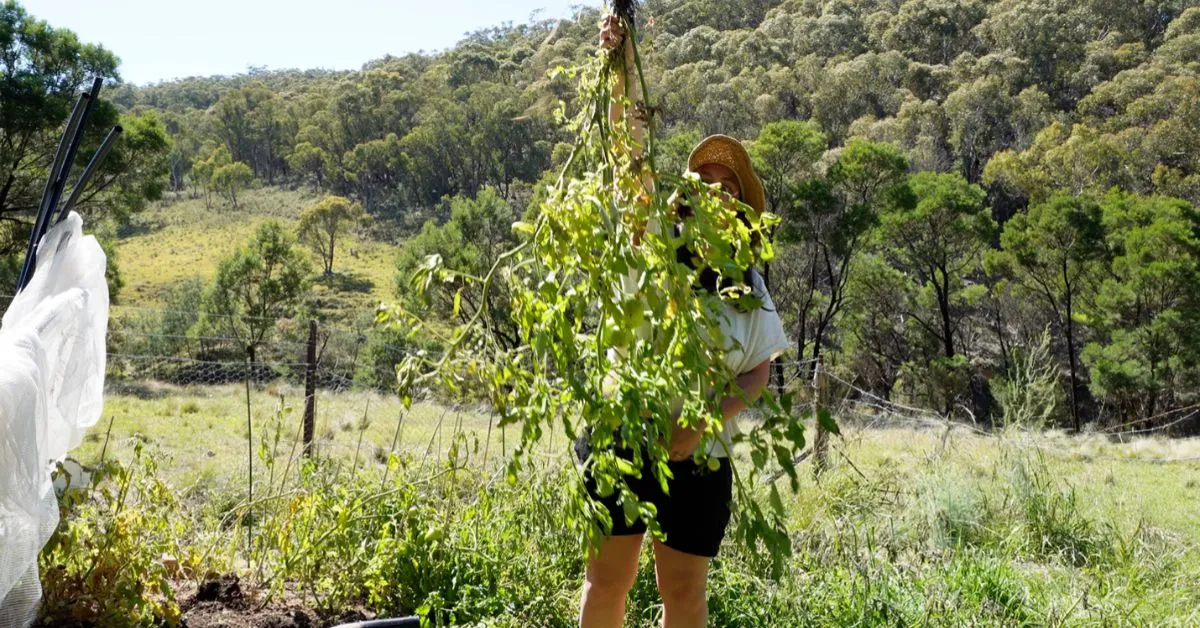
Our tomato plants were loaded with green fruit that simply hadn’t had enough time to ripen before the frost. Rather than wasting them, we tried an old gardening technique that many experienced growers swear by. We pulled the entire plants out, roots and all, trimmed back the foliage and hung them upside down in the shed to see whether the remaining tomatoes would continue to ripen.
Will it work?
Honestly, we don’t know yet.
But that’s one of the things we enjoy most about gardening. Every season is an experiment.
Sustainability often gets talked about as if it’s all solar panels, electric cars and complicated technology. Those things certainly have their place, but sustainability also lives in the small decisions we make every day.
It’s choosing to see value where others see waste.
It’s looking at a plant full of green tomatoes and wondering whether there’s another option before sending it to the compost.
Even if the experiment fails, we’ve still learned something. That’s never wasted effort.
Of course, not everything has to be rescued. Those green tomatoes can still become delicious relish or chutney, preserving part of the harvest instead of letting it go to waste. Sustainability isn’t always about getting exactly what we planned. Sometimes it’s about adapting to what nature gives us.
The same mindset carries through the rest of the homestead.
As winter settles in, we’re also turning our attention to our FLOW Hive. Our bees have worked incredibly hard all season, and now it’s our turn to make sure they’re protected through the colder months. Preparing the hive for winter isn’t glamorous, but it’s another reminder that sustainability is about stewardship. Looking after the systems that look after us.
We’ve also been reflecting on this year’s tomato patch.
Some varieties thrived, others struggled. We planted too closely together, mixed determinate and indeterminate varieties without much planning and made harvesting harder than it needed to be.
But that’s gardening.
Every mistake becomes next year’s improvement.
That’s another lesson sustainability teaches us.
Progress beats perfection every single time.
We’re not trying to build the perfect homestead. We’re trying to build one that’s a little better every season. One that produces more food, creates less waste, supports more wildlife and teaches us something new along the way.
The funny thing is, those lessons don’t just apply to gardening.
They apply to almost everything.
The most sustainable way to live isn’t necessarily about buying more environmentally friendly products. Often, it’s about learning to value what we already have. Repairing instead of replacing. Experimenting instead of giving up. Working with nature instead of constantly fighting against it.
Sometimes that starts with something as simple as a tomato plant that looked finished after the first frost.
Maybe it still has one more harvest left in it.
And maybe we all do too.